How to Read a Transformer Nameplate Before You Sell
A clear photograph of the complete transformer nameplate is the fastest way to communicate the unit's identity and rated configuration. Include the whole plate straight-on, a complete-unit view, and a photo of loading access. Do not open energized or secured compartments, remove covers, touch terminals, or operate switches to obtain a picture.
Start With Manufacturer, Serial Number, and Year
Photograph the manufacturer's complete name and every model, serial, date, revision, or factory marking. Serial numbers can connect a unit to factory records, test data, or design documentation. Do not crop prefixes or suffixes, and do not guess at characters obscured by corrosion or glare.
Record Every Capacity and Voltage Marking
The kVA or MVA rating describes the transformer's stated capacity under rated conditions. Some liquid-filled units show multiple ratings associated with natural and forced cooling stages. The high-voltage and low-voltage fields may include grounded-wye, delta, slash, neutral, or multiple-voltage notation. Record the entire string rather than reducing it to a single number such as “480.”
Phase, Frequency, Taps, and Connections
Nameplates commonly identify single- or three-phase construction and a 50 or 60 Hz frequency. Tap tables describe available ratios, while winding and phasor diagrams show terminal arrangement and delta, wye, or grounded-wye relationships. Photograph diagrams clearly instead of rewriting them from memory.
Impedance, Cooling, and Temperature Rise
Percent impedance is relevant to fault-current behavior, voltage performance, replacement matching, and parallel operation. Cooling codes such as ONAN or ONAF describe how heat is removed, and temperature-rise values state a thermal rating basis. These fields should be interpreted together by qualified professionals for an operating application.
Winding Material, Fluid, and Weight
A plate may identify copper or aluminum windings, insulating-liquid type and quantity, total weight, and core-and-coil or untanking weight. If a field is absent or unreadable, say so. Age alone does not establish oil chemistry or PCB concentration, and a photograph is not a substitute for records or appropriate laboratory analysis.
Three Photos That Reduce Follow-Up Questions
- Nameplate: fill the frame, shoot straight-on, avoid glare, and confirm the smallest text is readable.
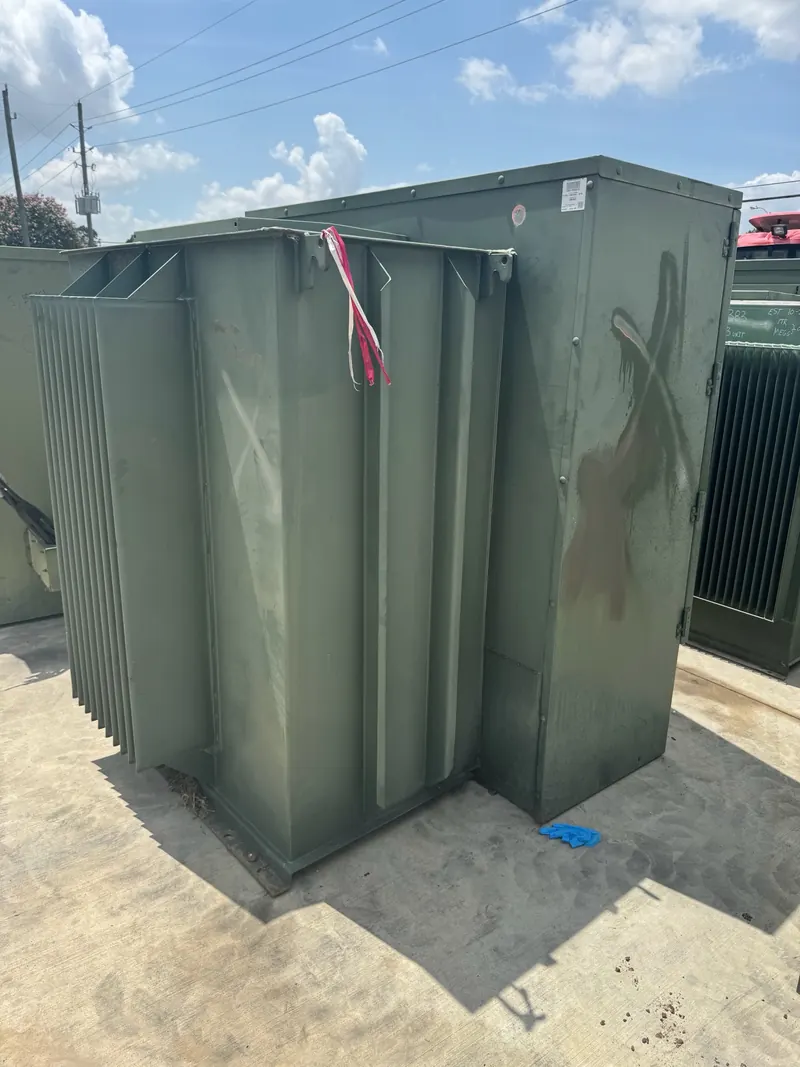
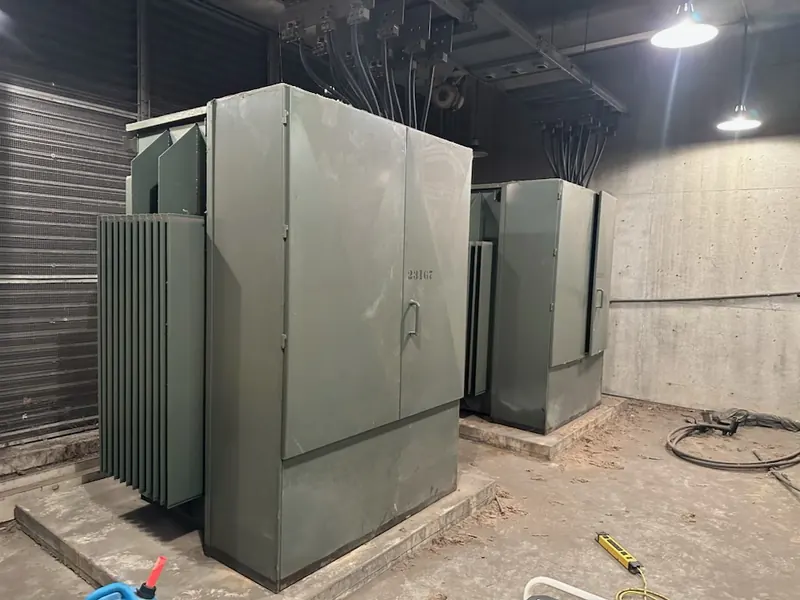
- Complete transformer: show the enclosure, bushings or terminals, radiators or fans, gauges, leaks, corrosion, and visible damage.
- Pickup access: show doorways, fences, overhead restrictions, loading areas, and the route to a truck-accessible surface.
Information to Send With the Photos
Include the city and state, quantity, operating or removed status, known test and maintenance records, fluid documentation when applicable, removal deadline, loading assistance, and a callback number. Nameplate data is the starting point; purchase availability and offer terms also depend on condition, configuration, documentation, location, access, and current demand.
Sell Electrical Transformers | Sell Surplus Transformers | Transformer Recycling Guide | Send Photos for Evaluation | Call (951) 903-9804
Show the Complete Transformer and Its Surroundings
Original business photographs published with owner authorization.